
Choosing the Right Rug Size
Master proportions, avoid sizing mistakes, and create balanced spatial flow across your living areas.
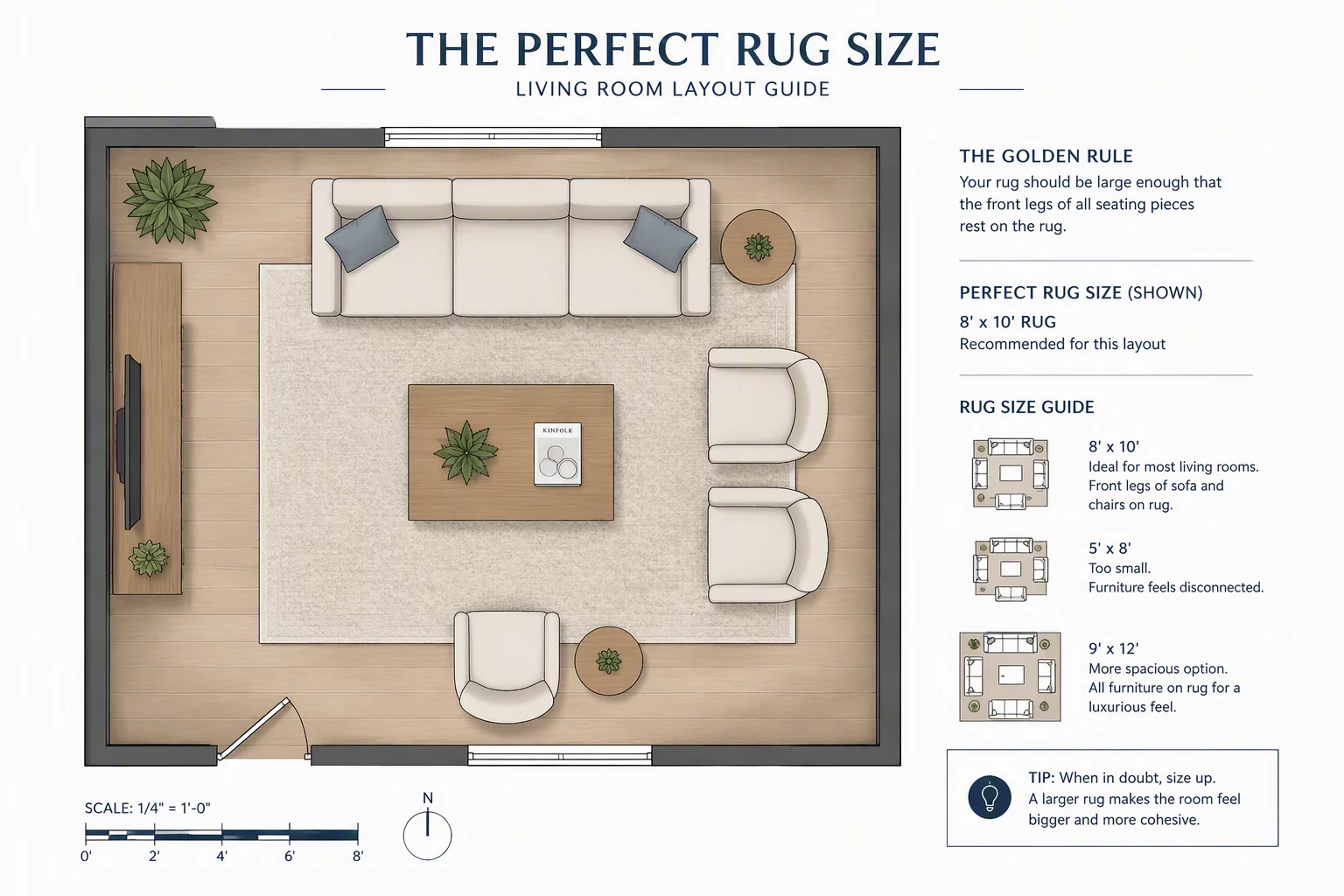
An area rug serves as the visual anchor of an interior. It establishes clear functional boundaries and binds distinct furniture elements into an integrated aesthetic. Selecting the wrong rug dimensions remains one of the most common interior mistakes, causing expansive rooms to feel sparse and compact areas to appear cluttered.
Living Room Layout Rules: Front Legs vs All Legs
In standard living rooms, rug dimensions determine how seating arrangements interact. As a rule of thumb, an area rug should accommodate at least the front legs of all principal seating pieces. Floating a tiny rug solely under a coffee table creates visual disconnection. Choosing an 8x10 or 9x12 area rug anchors your sofa and armchairs seamlessly.
Dining and Bedroom Dimensions
Dining rooms require functional perimeter space. The rug should extend 24 to 30 inches beyond all sides of the dining table so chair legs stay completely on the pile when guests slide back. In bedrooms, placing an 8x10 rug under the lower two-thirds of a queen or king bed provides balanced footing on both sides.
- Living Rooms: Standard 8' x 10' or 9' x 12' dimensions allow front or all furniture legs to rest naturally on the rug pile.
- Dining Rooms: Ensure a minimum 24-inch border around all sides of your table for smooth chair movement.
- Bedrooms: Position rugs under the bottom two-thirds of the bed frame, extending 24 to 36 inches on either side.
Before purchasing, outline potential rug boundaries on your floor using painter tape. This simple visual check ensures proportions match your real-world clearances before placing an order.
Reader Comments & Reviews
2I always bought them too small, this makes sense now.
Thanks for the dimension cheat sheet.